The construction industry has understandably become focused on the concept of the Golden Thread. Introduced through the Building Safety Act and wider post-Grenfell reforms, the principle is simple: critical building safety information should be accurate, accessible, traceable and maintained throughout the life of a building.
Fire Door Safety Week is a timely reminder that fire door compliance is not just about achieving a rating, but about maintaining a clear, traceable chain of evidence throughout the life of a building.

Fire Doors and the Golden Thread
For fire doors, evidencing compliance means much more than achieving a fire rating. It means being able to demonstrate exactly how a doorset has been tested, what evidence supports its performance, where the limits of that evidence lie, and how to maintain compliance through specification, installation, inspection, and maintenance. Ultimately, the Golden Thread demands a simple question be answered with confidence: “Show me the evidence.”
More than a Certificate
When a fire-rated doorset arrives on site, the fire rating itself is only the conclusion. The real question is:
What evidence supports that claim?
A fire doorset is a complete system consisting of the door leaf, frame, hardware, glazing, seals and installation method. The doorset’s performance depends on those components working together as a tested assembly.
As duty holders, contractors and specifiers face increasing scrutiny, it is no longer enough to rely on a certificate, datasheet, or marketing claim. The strongest compliance position is always one where performance claims can be traced directly back to robust supporting evidence.
Primary Test Evidence: The Foundation of Compliance
Everything starts with primary fire testing.
Typically undertaken to BS EN 1634-1, fire testing generates the raw evidence that demonstrates how a complete doorset performs under controlled fire conditions. Importantly, the test only applies to the specific configuration that was tested. The door construction, frame profile, hardware, glazing, seals and installation details all contribute to the final result. Without primary test evidence, there is no technical basis upon which wider claims can be made.
This may sound obvious, but the industry is often presented with a wide range of assessments, certificates and technical documents that can make it difficult for non-specialists to understand the true strength of the evidence behind a particular fire performance claim.
The Golden Thread requires transparency. The closer a performance claim can be traced to primary fire testing, the more confidence you can place in it.
Understanding EXAPs
One of the most valuable tools in modern fire door compliance is the Extended Application Report (EXAP).
Developed using the EN 15269 series, an EXAP provides a structured method for extending proven fire test evidence to cover additional door configurations without having to physically test every possible variation.
This may include:
- Alternative hardware options
- Larger door sizes
- Additional glazing arrangements
- Frame variations
- Alternative configurations within defined limits
An EXAP is not a substitute for testing, nor is it simply an engineering opinion.
A properly produced EXAP applies codified rules within the EN 15269 framework to existing primary fire test evidence. The resulting scope remains anchored to proven performance rather than assumptions. This distinction matters because not all supporting evidence in the marketplace is created the same way.
Not All Supporting Evidence is Equal
As the industry moves towards greater accountability and traceability, specifiers should understand the difference between evidence that is directly derived from recognised fire testing and evidence that relies more heavily on broader technical assessments or engineering judgements.
While assessments may have a legitimate role in specific circumstances, they should never be assumed to carry the same evidential strength as an EXAP developed in accordance with the EN 15269 standards and backed by relevant primary fire test evidence.
Responsible specifiers should therefore ask:
- What was actually tested?
- What evidence supports the assessment?
- Is the scope supported by EN 15269 extended application methodology?
- Can the claim be clearly traced back to primary testing?
The Golden Thread is founded on transparency, and transparency requires an unbroken chain of evidence.
Hardware Evidence Matters Too
One frequently overlooked area is hardware.
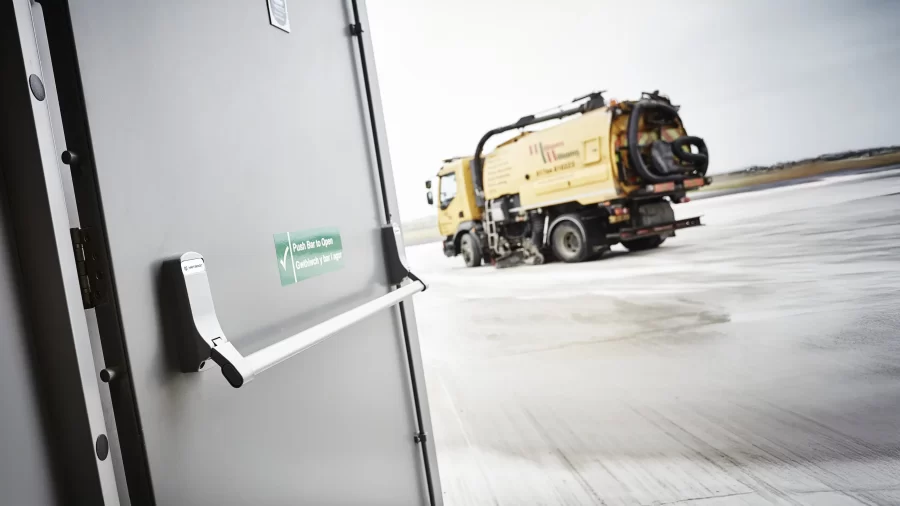
Yet locks, cylinders, panic exit devices, emergency exit devices, electric strikes, electromagnetic locks, access control equipment and other ironmongery can all significantly influence fire door performance. A common misconception is that if a piece of hardware has been successfully tested elsewhere, it can automatically be fitted to any fire-rated doorset.
In reality, compliance is rarely that straightforward. The key consideration is not whether the hardware has ever been tested, but whether evidence supports its use on the specific doorset construction being supplied.
As buildings increasingly utilise electronic locking systems, mechatronic hardware and sophisticated access control solutions, the need for robust supporting evidence becomes even more important.
The strongest compliance position is achieved when:
- Hardware is included within primary fire testing, or
- Its use is supported through the applicable EXAP scope and associated test evidence.
Relying on unrelated test reports from another doorset or manufacturer does not always provide the traceability expected under modern Golden Thread principles. When reviewing any fire doorset specification, the question should therefore be:
“What evidence supports this hardware on this doorset?”
External Fire Doors require more than Fire Testing
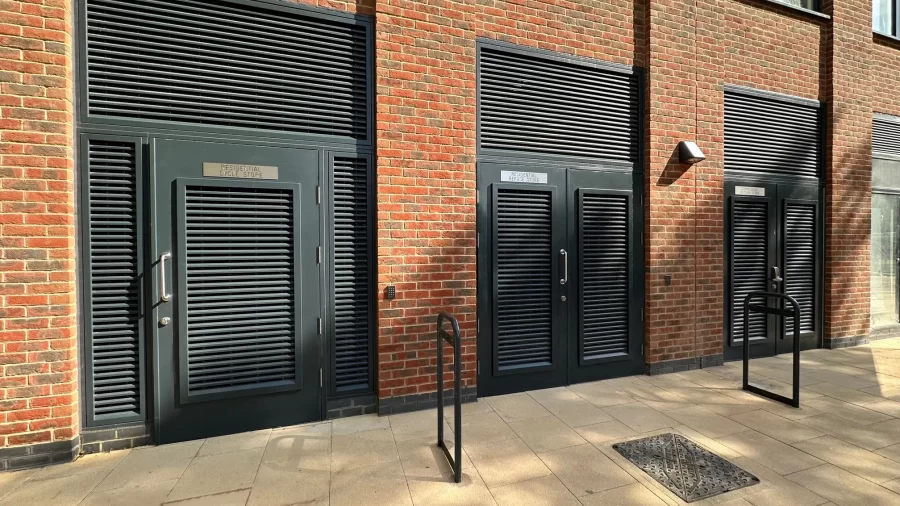
External fire-rated doorsets introduce an additional level of complexity – they are not simply internal fire doors located outside.
As part of the building envelope, external fire-rated doorsets must satisfy a wider range of performance requirements beyond fire resistance alone. This is where EN 16034 and BS EN 14351-1 become critically important. Together, these standards provide a framework for demonstrating both fire performance and the wider characteristics expected of an external pedestrian doorset, including weather resistance, durability, and environmental performance. Specifiers should therefore be cautious of external fire door solutions that demonstrate fire resistance but cannot provide suitable evidence relating to their role as an external doorset.
A compliant external fire doorset should demonstrate evidence that addresses both requirements.
BS 8214: Connecting Testing to Real-World Performance
Even the best fire test evidence can be undermined if a doorset is poorly specified, incorrectly installed or subsequently modified. That is why BS 8214 remains such an important standard for the fire door industry.
The standard provides practical guidance covering:
- Specification
- Design
- Installation
- Inspection
- Maintenance
- Ongoing performance in use
Recent revisions have further strengthened the industry’s focus on supporting evidence, accountability and traceability throughout the lifecycle of a fire doorset.
In effect, BS 8214 bridges the gap between laboratory testing and real-world building performance. A fire doorset is not compliant simply because it left the factory correctly. It must remain compliant throughout the life of the building.
Why Metador’s Approach aligns with the Golden Thread
At Metador, we don’t treat compliance as a paperwork exercise. We believe fire door performance claims should be supported by clear, traceable and technically robust evidence.
Our approach focuses on:
- Primary fire test evidence generated through recognised fire testing programmes.
- Standards-based EXAPs developed in accordance with the EN 15269 series.
- Careful control of hardware specifications to ensure fire performance claims remain properly supported.
- External fire-rated doorsets supported by both EN 16034 and BS EN 14351-1 evidence where required.
- Clear supporting documentation, including classification reports, certification and installation guidance.
- Ongoing investment in testing, compliance and technical development.
- Improved accessibility of supporting information through our developing digital documentation and QR-code systems.
Most importantly, we aim to provide customers with confidence that every claim can be traced through a logical evidence chain, from the installed doorset back to the underlying fire testing programme.
The Future of Fire Door Compliance
The industry is moving away from compliance based solely on ratings, certificates and marketing statements. The future is evidence-led.
That means understanding:
- The primary fire tests that generated the evidence.
- The classification reports that define the performance.
- The EXAPs that extend the validated scope.
- The evidence supporting hardware selection.
- The requirements of EN 16034 and BS EN 14351-1 for external doorsets.
- The installation and lifecycle requirements set out within BS 8214.
The organisations that will thrive in this environment are those that embrace transparency rather than simply compliance. Because when regulators, contractors, building owners or duty holders ask the question:
“Show me the evidence.”
The answer should be clear, traceable and backed by documentation every step of the way. That is the essence of the Golden Thread, and ultimately, the foundation of safer buildings.