Specifying the correct escape doorset is critical for safety and compliance.
Confusion often arises between panic escape and emergency escape doorsets because both are designed to facilitate rapid escape in an emergency, but they are not the same thing. The key difference is who is expected to use the door and whether panic is likely.
This guide explains the key differences, the relevant standards, and advice on how to specify the right solution.
BS EN 1125 and BS EN 179 Standards
Panic exit hardware and emergency exit hardware are two categories of door fittings designed for building escape.
They are defined by two British-adopted European Standards:
- BS EN 1125:2008 (panic exit devices)
- BS EN 179:2008 (emergency exit devices)
When choosing between BS EN 1125 or BS EN 179 devices, the key question is:
Will those using the escape door be familiar with the building and how the hardware operates, or could they be unfamiliar users acting under panic conditions?
- If the door may be used by the general public, large numbers of people, or people unfamiliar with the building, BS EN 1125 would apply.
- If only trained staff or familiar occupants use the door in a controlled area, BS EN 179 may be suitable.
BS EN 1125:2008 Panic Exit Devices
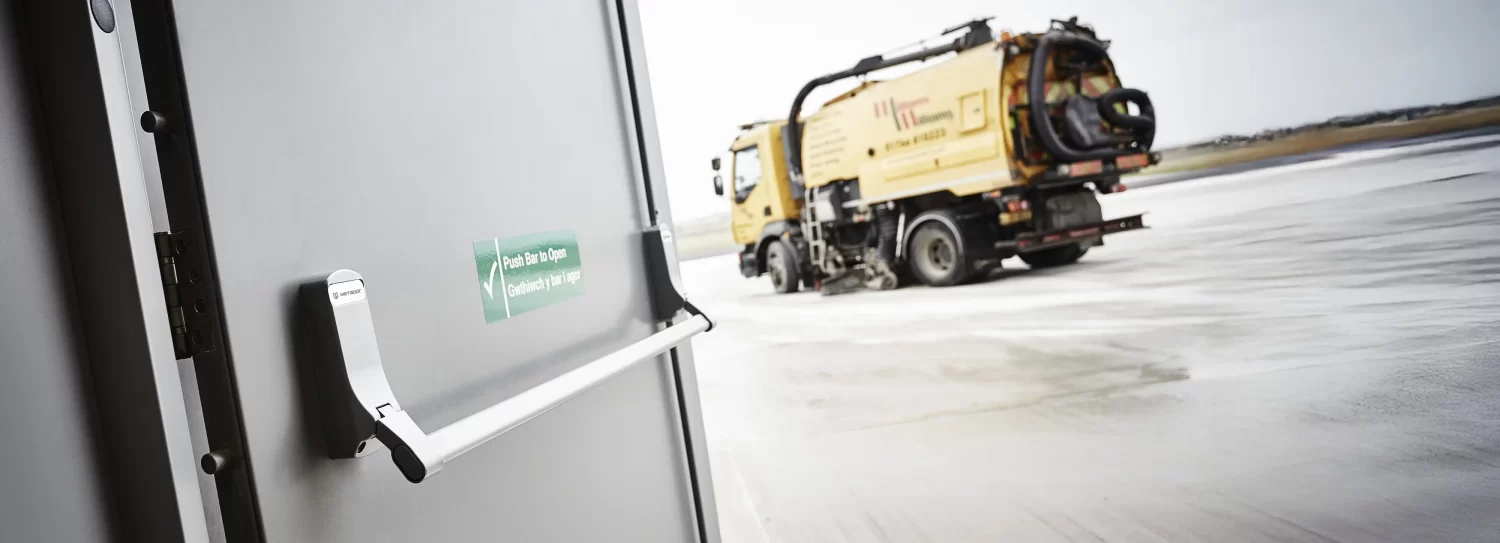
The BS EN 1125 standard covers panic exit devices, typically a push bar spanning at least 60% of the width of the door leaf. Where escape doors may be used by the public or unfamiliar occupants, BS EN 1125-certified panic exit devices are typically the appropriate solution; the hardware is designed to allow rapid, intuitive escape by occupants who may be unfamiliar with the hardware, and panic can be foreseen.
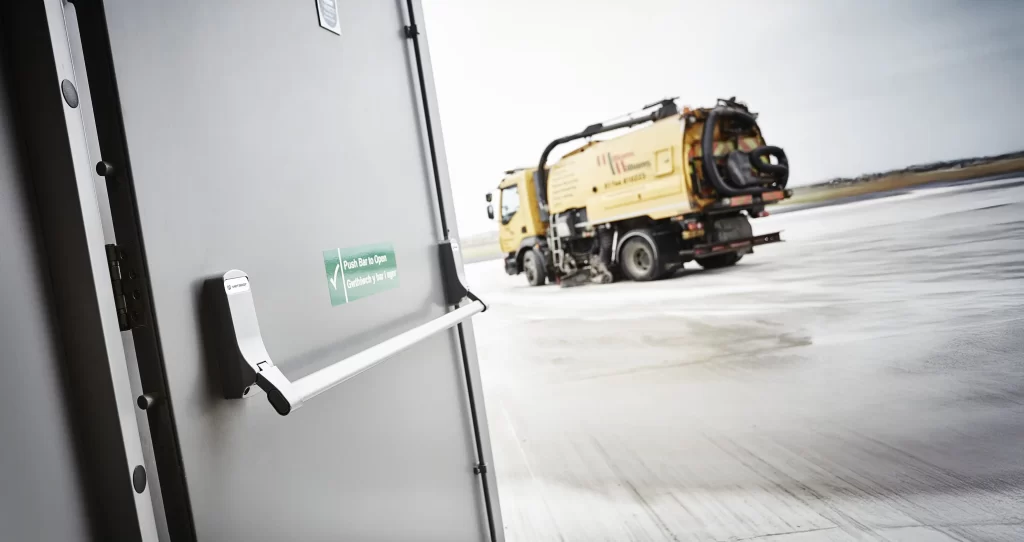
Speak to our team about our Panic Escape Doorset options
BS EN 179: Emergency Exit Devices
BS EN 179 covers emergency exit devices used on escape doors where occupants are familiar with the building, the escape route and the operation of the hardware. These devices are typically lever handles, push pads or paddle-type mechanisms, and are suitable for controlled areas where panic is not expected.
The key point is that panic is not expected because users should already understand how to operate the door. For example: A rear door in an office with a push-pad or lever handle.
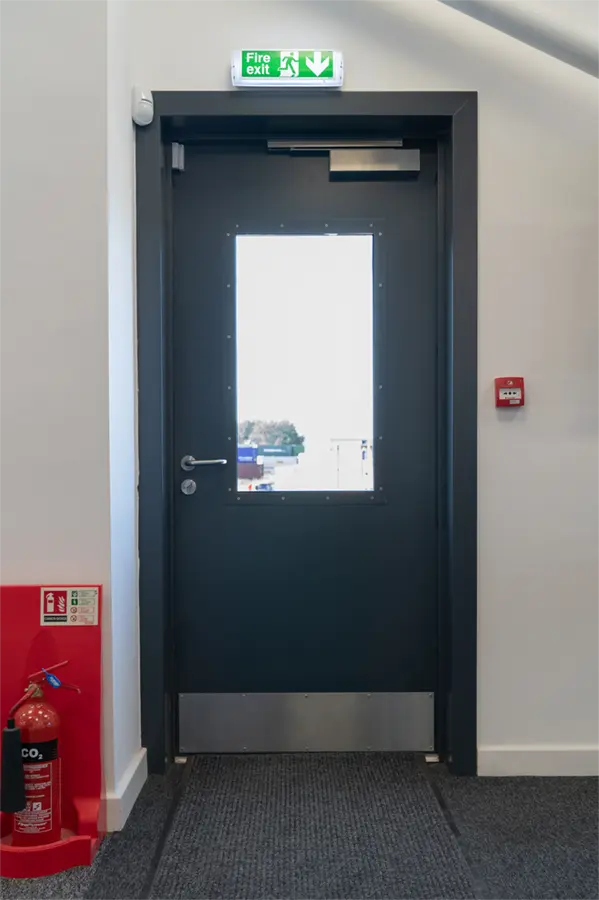
Enquire about our Emergency Escape Doorset options
Both panic and emergency exit devices must allow the door to open in a single action to escape, without the use of a key. Where external access is required, compatible outside access devices can be specified, provided they do not compromise the escape function from the inside.
Where there is uncertainty over whether BS EN 179 or BS EN 1125 applies, a risk-based approach should be taken. If anyone unfamiliar with the building or hardware may use the escape door, BS EN 1125 panic exit hardware should be specified. In cases of doubt, the safer approach is to specify BS EN 1125 and seek guidance from the relevant fire safety professional or approving authority.
What about electrically controlled escape doors?
Some escape doors incorporate access control systems, electric locking or other electronically controlled hardware. In these situations, BS EN 13637 may also be relevant. BS EN 13637 covers electrically controlled escape route systems and includes additional requirements to ensure occupants can still escape safely in an emergency.
The suitability of BS EN 1125, BS EN 179 and BS EN 13637 should be considered as part of the overall door, hardware and building fire strategy.
At Metador, we offer a range of BS EN 1125 Panic Exit and BS EN 179 Emergency Exit devices to suit different applications and security requirements. We can supply our doorsets with hardware such as the Exidor 200 series / Exidor 700 series or lever-handle latch operation, while our LPS 1175 B3 (SR2) doorsets can incorporate MICO Tindall Modula and MSR escape solutions for higher-security applications.
Fire Exit Door or Fire Rated Door?
A fire exit door is about escape. A fire-rated doorset is about fire resistance. Some doorsets may need to deliver both functions.
Fire Exit Doors
A fire exit door is intended to enable occupants to leave a building safely during a fire or other emergency. Often acting as the final exit from a building, it is fitted with appropriate panic or emergency exit devices to facilitate rapid evacuation.
Importantly, a fire exit door is not always required to be fire-resistant. Its primary function is safe escape, not fire containment. As such, it shouldn’t be assumed that a fire exit door is fire-rated—although in some cases, it may be.
Fire Rated Doors
In contrast, fire-rated doorsets are complete, tested door assemblies designed to resist fire for a specified period, such as E30, E60 or E120. They support fire compartmentation by helping slow the spread of fire.
In some applications, a door can perform both functions. A fire-rated, fire exit door may be used where the fire strategy requires both fire compartmentation and emergency egress.
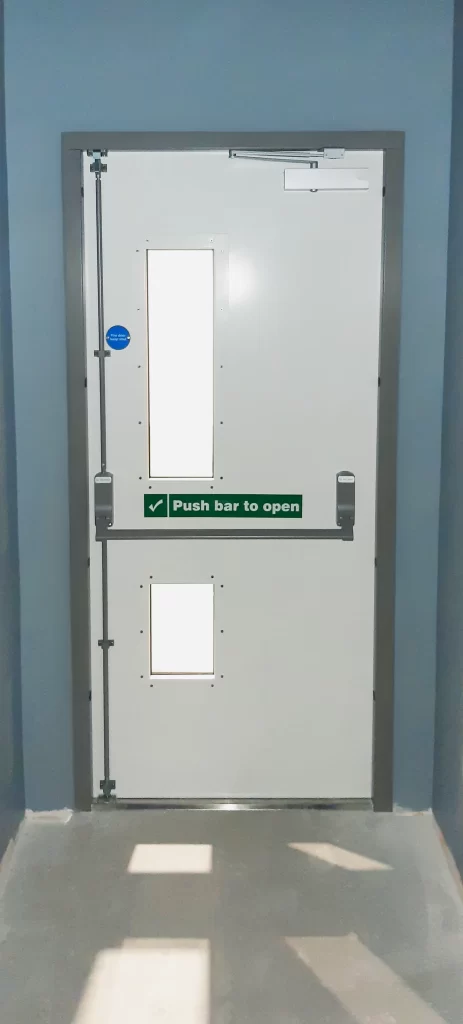
Considering the Whole Escape System
All escape hardware must be correctly specified alongside the doorset, frame, and hardware as a complete system and installed in accordance with the manufacturer’s tested configuration. Panic and emergency exit hardware are only one element of the overall escape strategy and should be considered alongside occupancy profile, fire strategy, access control requirements, and any project-specific guidance from the responsible fire safety professional.
Metador’s Steel Escape Doorsets
From bespoke options to standard escape doors, Metador manufactures every steel doorset using the same core construction principles and high-quality materials.
This includes:
- Bolted Construction for Strength
- Durable 1.5mm galvanised steel door leaf
- Solid 2.0mm galvanised steel frames
- Mineral wool core
- Stainless steel thresholds
- Easy Installation
- Designed for long-term performance.
See more information on our product datasheets
Need further information?
If you need help specifying the right escape doorset, speak to our team of steel door experts for guidance on BS EN 1125, BS EN 179, fire-rated doorsets and compliant hardware options:
- T: 01642 337119
- E: sales@metador.com
Join Our Mailing List
Stay up to date with company news and product developments