Back
Contact
Find Us
Metador Ltd,
Britannia House,
John Boyle Road,
Middlesbrough,
TS6 6TY
Contact
Find Us
Metador Ltd,
Britannia House,
John Boyle Road,
Middlesbrough,
TS6 6TY
Looking for durable fire rated external doors for final exits and building perimeters? Metador’s external steel doorsets combine reliable fire protection with security, thermal efficiency and accessibility. UKCA marked steel doorsets, tailored to your project.
Our fire rated external steel doorsets are UKCA marked in accordance with the Construction Products Regulations, and manufactured in line with BS EN 14351-1:2006+A2:2016 and EN 16034:2014.
Some products begin as fire doors and are then adapted for external use. Metador’s fire rated external doors are designed as External Fire Doorsets from Day One.
Metador external fire rated doorsets are manufactured and supplied as complete external doorsets intended to satisfy both EN 16034 fire performance requirements and EN 14351-1 external pedestrian doorset requirements. This helps ensure that fire performance, weather resistance, durability and day-to-day operation are considered together as part of a single tested system.
Designed to support life safety, these doorsets form part of a building’s fire strategy, helping to contain fire and protect escape routes when correctly specified and installed. Share your drawings or door specifications, and we’ll help you choose the right fire rated external doors for each opening.
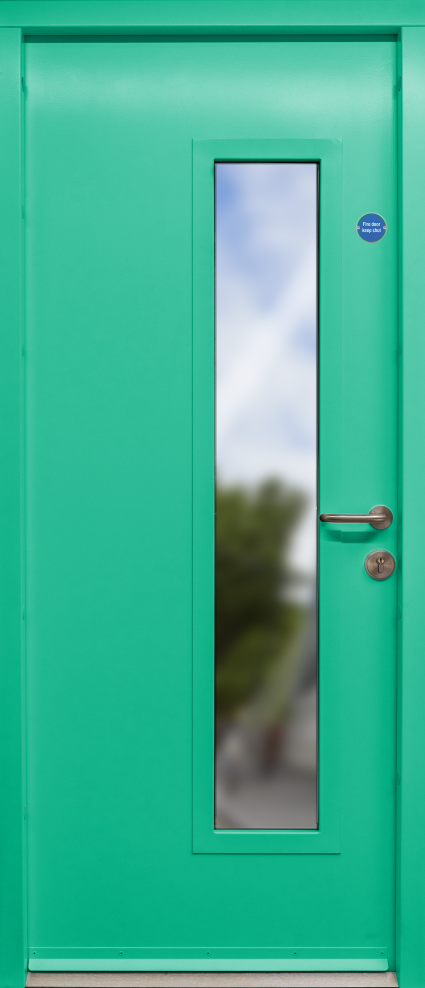
There is often confusion between fire escape doors and fire rated doors, and the distinction matters when specifying the right solution.
A fire escape door is designed to enable people to leave the building quickly and safely. The focus is on:
A fire rated door, by contrast, is designed to:
In many applications — particularly external final exits — a door may need to perform both roles, and must therefore be specified and tested as a complete doorset to meet both fire performance and escape requirements.
Fire rated external doors play a specific role within a building’s fire strategy. Located at final exits, plant areas and perimeter openings, they are required to:
Because every building is different, our external fire rated doorsets are made-to-measure and available as:
Each doorset is supplied as a complete system — including leaf, frame, seals, threshold and hardware — designed to work together as tested.
Share your drawings or door specifications, and we’ll help you choose the right fire rated external doors for each opening.
External fire rated doors are usually found at the end of escape routes or where a fire compartment opens directly to the outside.
Common applications include:
In all cases, the doorset must balance fire performance with external durability.
Not all fire doors are suitable for external use.
A fire rated external doorset is installed within the building envelope and must meet both:
This may include doors in exposed, recessed or partially sheltered positions.
To perform correctly, an external fire doorset must:
External fire doors are typically classified using E ratings (E30, E60, E120), indicating integrity performance under test conditions. Our external steel fire doors are built and certified specifically for this role.
Different parts of a building need different levels of protection.
But what does a fire rating actually mean?
A fire rating (such as E30, E60 or E120) refers to the length of time a doorset maintains its integrity when exposed to fire under test conditions. In simple terms, this means:
These criteria define an “E” (integrity) rating.
It’s important to understand what this does not cover. An E-rated fire door does not measure heat transfer or thermal radiation to the non-fire side. The surface can still become extremely hot.
Where limiting heat transmission is critical – for example on certain escape routes or areas where people may be in close proximity to the door – a higher classification such as EI (integrity + insulation) may be required.
With external fire rated steel doors, the most common ratings are:
The correct fire rating is determined by the fire resistance of the wall construction in which it is installed. This is defined by the Fire Strategy of the building, which demonstrates compliance with the required regulations. We work with designers, contractors, and fire engineers to help with their correct external fire rated doorset solution.
Not sure which external door fits your needs? Tell us a bit about your building and we’ll help you choose the right fire rated external doors for each opening.
Choosing Metador means choosing peace of mind, superior security, guaranteed compliance, and exceptional UK-made quality. Contact our experts today and find the perfect external fire door for your project.
You’ll see fire rated external doors in a range of materials, like aluminium or steel. For genuinely hard-working entrances and exits, steel external fire doors excel:
In practical terms, fire rated external steel doors are a strong choice for industrial units, warehousing, energy and utilities sites, large commercial buildings, and public-sector estates where the door is going to be used constantly and needs to keep performing.
Modern fire rated external doors have to hit several targets at once. As part of a building envelope, they are expected to:
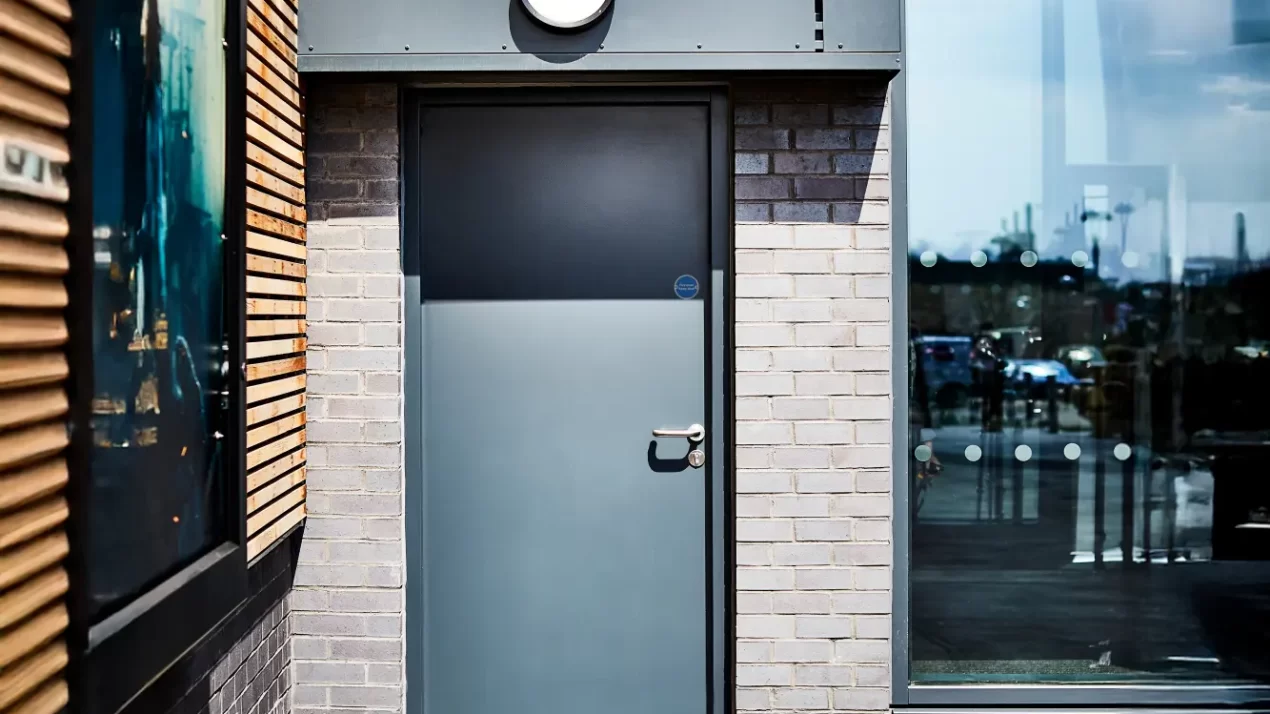
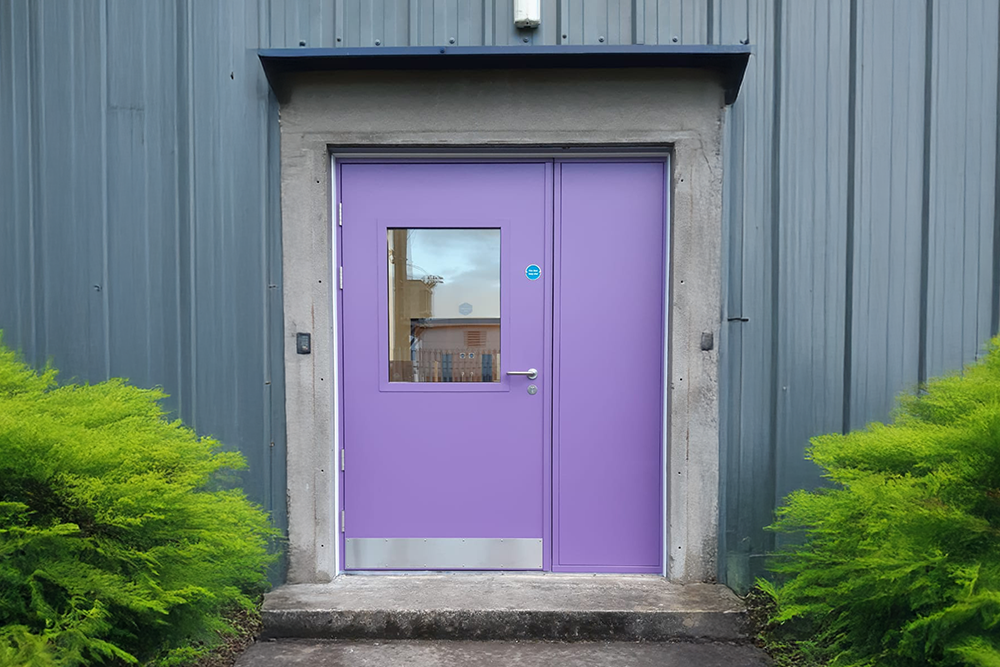
Because we supply made-to-measure external fire rated doorsets, you can specify single or double doors, side and over panels where permitted by the test evidence, and finishes that work with metal cladding, brickwork or curtain walling – without losing sight of the fire performance.
Enquire about our doors
Share your drawings or door specifications, and we’ll help you choose the right fire rated external doors for each opening.
Choosing the right fire rated external doors isn’t just about picking a fire rating from a drop-down list. It’s about understanding how the building is used, how people will escape, what sits beyond the boundary, and how the doors will be used every day.
We’ll help you:
Get your personalised quote today, and we’ll work through your drawings or schedule with you.
A fire rated external door is a complete external doorset – leaf, frame, seals, glazing and hardware – that has been tested to resist fire for a specified period (for example 30, 60 or 120 minutes) and certified to EN 16034 in combination with BS EN 14351-1. It also has to meet weather, durability, and, increasingly, thermal requirements as part of the building envelope.
To avoid confusion, you need to know that fire escape doors enable fast, unobstructed egress, typically with panic hardware and outward opening.
Fire rated doors, on the other hand, are designed to contain fire and smoke for a set period, protecting escape routes and slowing fire spread as part of the building’s compartmentation strategy.
In short, no. Internal fire doors are not designed or tested for external weather exposure and will not meet the standards required for external fire doorsets. All external fire-resisting doorsets should be CE or UKCA marked in line with BS EN 14351-1 and EN 16034, supported by valid test evidence, classification reports and a Declaration of Performance.
Yes. External fire-resisting doorsets are generally required to be supplied with CPR conformity marking (UKCA or CE, as applicable) and a Declaration of Performance. This demonstrates that the complete external fire rated doorset has been tested and assessed correctly.
Metador fire rated external steel doors are available with E30, E60 or E120 ratings, indicating 30, 60 or 120 minutes of fire integrity under test conditions. The appropriate rating depends on your fire strategy and is linked to the fire resistance of the element of structure in which the doorset is installed.
You’ll typically find them on final exits from protected stair cores and corridors, doors to plant rooms and high-risk service spaces that open to the outside, and on boundaries where there is a risk of fire spreading to neighbouring properties. The official UK GOV Fire Safety Regulations and related fire safety documents will influence exactly where they are required in each building.