When specifying a secure doorset, understanding the differences between UK security standards is essential. PAS 24, LPS 1175 and Secured by Design are frequently referenced across residential, commercial and industrial projects—but what do they really mean, and how do they differ?
This guide explains how door security ratings work, outlines the key UK Security standards for steel doorsets, and helps you determine which certification is right for your project.
What are security ratings for doors?
Door security ratings are independent, third-party certifications that assess a doorset’s resistance to forced entry. Products undergo controlled-attack testing and are certified based on their ability to withstand specific tools, techniques, and attack durations.
Once tested, a doorset is awarded a security classification that demonstrates its suitability for particular environments—from residential dwellings to high-risk industrial facilities.
In the UK, two of the most widely recognised standards for security steel doorsets are PAS 24 and LPS 1175.
What is LPS 1175?
LPS 1175 is a globally recognised Loss Prevention Standard developed by the Loss Prevention Certification Board (LPCB), part of the BRE Group. It is widely regarded as a benchmark for physical security products designed to resist deliberate, sustained attacks.
How LPS 1175 Works
The current LPS 1175: Issue 8 standard involves a series of rigorous physical tests that simulate real-world attacks. Doorsets are challenged using progressively more aggressive tools and methods, with each test level reflecting:
- The type of tools used
- The skill level of the attacker
- The time spent attempting entry
LPCB Loss Prevention Standard – BRE Global Limited, 2020
Issue 8 of LPS 1175 is the latest revision of the standard, introduced in January 2019. It brought some key changes over Issue 7:
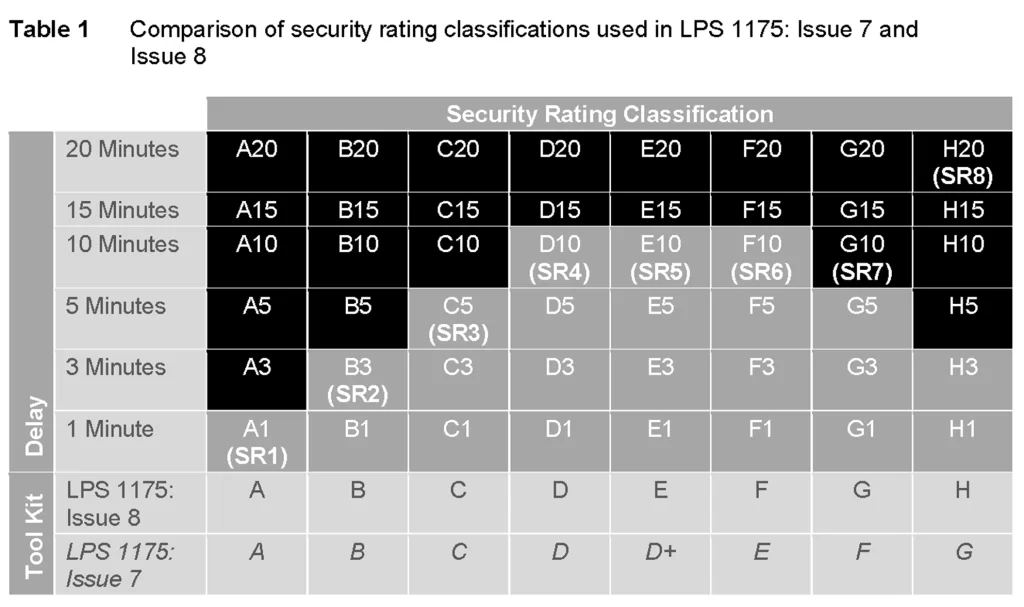
- New classification system, replacing the old linear fixed ratings – a two-part code consisting of a letter (A-H) denoting the tool category used, followed by a number (1-20) representing the minimum delay time in minutes. The new classifications provide greater granularity and flexibility for specifiers and manufacturers with a total of 48 possible combinations.
- Expanded and updated tool lists to reflect modern, widely accessible powered tools and drill bits.
- Attackers can be more than one person (Issue 7 assumed a single attacker), and changes to attack sequences to better reflect real-world intrusion attempts.
All of Metador’s LPS 1175-rated products are tested under the latest Issue 8 standards.
Products tested under LPS 1175: Issue 8 are graded from A1 (SR1) to H20 (SR8), with higher ratings indicating resistance to more severe and prolonged attacks. For example:
- B3 (SR2): Typically suitable for medium residential and lower commercial risk
- C5 (SR3): Medium commercial risk
- D10 (SR4): Commonly specified for high-risk commercial or industrial applications
- E10 (SR5): Critical national infrastructure, biological risk sites.
Regulatory Context
LPS 1175 is a voluntary 3rd-party scheme that provides assurance and a consistent benchmark for security. Certified products are verified via the LPCB RedBook Live online database.
Key Takeaways: LPS 1175
- Globally recognised and independently certified
- Designed to resist targeted, sustained attacks by determined professionals
- Graded A1 (SR1) – H20 (SR8) based on attack severity and duration
- Commonly specified for higher-risk environments
What is PAS 24?
PAS 24 (Product Assessment Specification 24) is a British Standard published by the British Standards Institution (BSI). It’s a minimum security requirement for residential external doors and windows. It is designed to resist opportunistic burglars with basic hand tools and short-duration attacks.
It sets out performance requirements for doorsets and windows used in dwellings and similar risk buildings, focusing on resistance to opportunistic burglary using commonly available, easily concealed tools.
Key Differences from LPS 1175
Both PAS24 & LPS 1175 work on a pass/fail basis. However, under LPS 1175, there are graded security levels, unlike PAS 24. The PAS 24 test standard sets out the test method in detail and can be followed by any suitably accredited test house. LPS 1175 testing is always carried out by BRE’s own highly experienced test engineers. They are given construction details prior to testing, and use their skills and experience (not to mention their strength and stamina!) to select appropriate tools and attack methods for each aspect of the doorset.
PAS 24 compliance is a legal requirement under the Building Regulations Approved Document Q for new residential developments in England. Testing applies to the doorset as manufactured, before installation.
When it comes to glazed doors & screens, the PAS 24 test does not include impact testing on the glass. Instead, glass is simply required to achieve a minimum security rating to BS EN 356 of P1A. That involves a drop test where a 4.11 kg steel sphere (100mm dia) is dropped onto the glass three times from a height of 1.5m. Contrast that with LPS 1175, where the glass is subjected to the same attack criteria as the rest of the doorset – for B3 (SR2), that will involve impacting with a claw hammer for 3 minutes.
Key Takeaways: PAS 24
- British Standard for residential security
- Mandatory for new dwellings under Building Regulations Approved Document Q
- Pass/fail certification (no grading system)
- Designed to resist casual or opportunistic attacks
What is Secured by Design?
Secured by Design (SBD) is an official police security initiative backed by the UK Government, which recognises products, developments and services proven to reduce crime. It is run by specialist police officers (Design Out Crime Officers or DOCOs) who work as consultants and advisors with local authorities, architects, planners, developers and security professionals throughout the UK.
Their core mission is to reduce crime and create safe spaces for communities for both residents and businesses through intelligent urban planning and tested security products. Products that meet its requirements achieve the SBD’s product-based accredited scheme, known as ‘Police Preferred Specification’.
This process requires that the product be independently tested, independently certified through a UKAS-accredited third-party certification body, and consistently monitored through regular retesting and annual manufacturing facility audits.
You can view the various product types included in the SBD scheme and their testing standards on the Secured by Design website.
Unlike PAS 24 or LPS 1175, Secured by Design is not a test standard. Instead, it is an overarching accreditation scheme that considers:
- Physical security of products
- Building design and layout
- Environmental and community safety factors
The SBD Residential Guide 2025 emphasises a holistic approach to security across all dwelling types.
There are various ways the Secured by Design can be met in regard to doorsets, including:
- PAS 24 (attack resistance, weather performance and cyclic testing)
- LPS 1175 (B3 (SR2) and above)
- STS 202 (A Certisecure scheme run by Warringtonfire Testing & Certification)
Although the use of SBD-accredited security products is not compulsory, it is often made a legally binding condition for new developments in London through the local planning process and building regulations.
How PAS 24 and LPS 1175 Fit Within Secured by Design
Secured by Design (SBD) brings together product testing and holistic building security under a single police-backed framework. Rather than acting as a test standard itself, SBD sets out how recognised standards like PAS 24 and LPS 1175 are used to demonstrate that doors and other building components meet its Police Preferred Specification.
For a residential door to achieve Secured by Design’s Police Preferred Specification, it must first pass PAS 24 testing as a baseline and is then subject to the ongoing third-party certification required by Secured by Design. SBD also recognises products tested to LPS 1175 B3 (SR2) and above under its scheme.
Key Takeaways: Secured by Design
- Considers the building as a whole, not just individual products
- Requires PAS 24 testing as a minimum for dwellings
- Recognises LPS 1175 (B3 (SR2)+) products
- Recognises STS 202 products.
Specifying the Right Doorset Standard
The correct security standard depends on the building’s location, risk profile and intended use.
Metador manufactures PAS 24-rated and LPS 1175-rated steel doorsets, all of which have achieved Secured by Design accreditation. For clients and specifiers, this accreditation not only ensures that products comply with mandatory building regulations but also provides the added benefits of proven security excellence and the assurance that the doorsets meet rigorous, police-preferred standards for crime prevention.
As a premium doorset manufacturer, we offer:
- Multiple configurations and glazing options
- A wide range of hardware and finishes
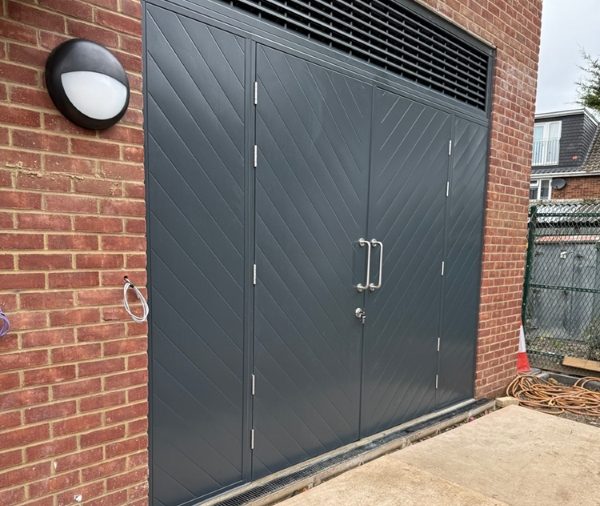
- Options for side and over panel configurations, both solid panels and louvres
- Integrated access control solutions for residential and commercial use
- Many of our PAS 24 and LPS 1175 B3 (SR2) doorsets are available with optional fire ratings of 30, 60 or 120 minutes. Fireshield for internal use, or FireshieldX for external use – UKCA marked and fully compliant with BS EN 14351-1:2006 and EN 16034:2014.
- Our PASguard steel doorsets offer a standard thermal rating U-Value of 2.2 W/m²K, with an optional Thermaguard upgrade to achieve 1.5 W/m²K.
Our steel doorsets can also be specified with modern detailing, colour finishes, and realistic woodgrain effects, combining visual appeal with uncompromising strength.
You can view our certified products directly on the Secured by Design website.
Speak to Our Experts
If you need guidance on specifying the right security-rated doorset, or are ready to place an order, our expert team is here to help.
📞 Call: 01642 337119
✉️ Email: sales@metador.com